
Ⅹ. 時間の建築 ─ 光が沈む場所
The Architecture of Time – Where Light Settles
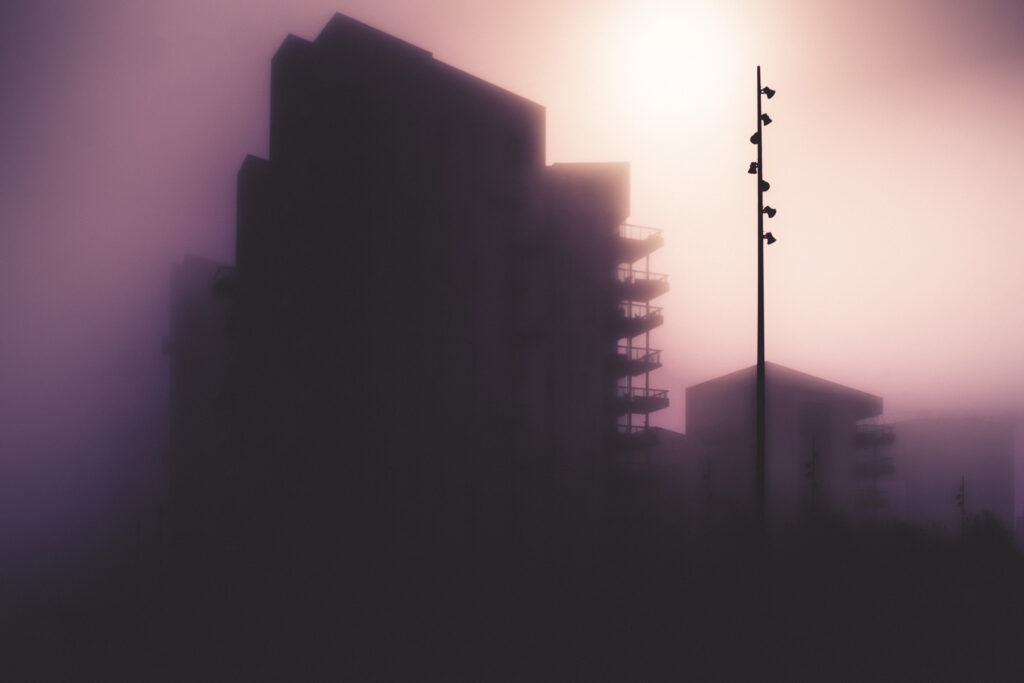
時間は、直線でも円でもなく、
光が沈む場所ごとに形を変える柔らかな建築である。
Time is neither line nor circle.
It is a soft architecture shaped by the places where light comes to rest.
私たちは時間を、時計の針や
カレンダーの罫で測っていると思い込んでいる。
だが本当の時間は、
光がどこへ沈み、どれほど留まり、
そしてどのように再び姿を現すのかという
ゆるやかな挙動の中に隠れている。
We think time is measured
by the hands of clocks or the lines of calendars.
But real time hides within the gentle behavior of light—
where it settles,
how long it stays,
and how it rises into presence once more.
朝の光は、まだ形になりきらない世界を
ゆっくりと目覚めさせる。
物の輪郭に触れるその速度は、
日によって微妙に異なる。
その違いは、生活のテンポや呼吸の深さと
密かに結びついている。
Morning light awakens a world
that has not yet taken full shape.
The speed at which it touches forms
subtly differs from day to day,
quietly tied to the rhythm of life
and the depth of our breath.
光が静かに沈む場所に、
時間のふくらみが生まれる。
Where light gently comes to rest,
time grows a calm swell.
昼の時間は、輪郭が最もくっきりと現れる。
世界は表層の強度を取り戻し、
影は短く、空間は均質になる。
だがその均質さの中でさえ、
目には触れにくい「揺らぎの溜まり」が生じている。
私たちは、そのわずかな揺らぎを感じ取ることで
空間の深さを読み解いている。
At noon, contours appear with the greatest clarity.
The world regains its surface strength.
Shadows shorten, space becomes uniform.
Yet even within this uniformity
lie subtle pools of fluctuation.
By sensing them,
we quietly read the depth of space.
夕方になると、
光は世界の表面を離れ、
ゆるやかに沈み始める。
この沈む速度こそが、
人の心の奥の「時間感覚」を震わせる。
As evening comes,
light withdraws from surfaces
and begins to descend slowly.
This descending speed
touches the deepest sense of time within us.
光が沈むとき、
空間の奥に隠れていた構造が
かすかに浮かび上がる。
その輪郭ははっきりしているわけではないが、
確かにそこに在る。
それは、昼には決して見えない
時間の「陰」の層である。
When light sinks,
the hidden structure of space
faintly emerges.
Its contours are not distinct,
yet unmistakably present.
It is the shadowed layer of time
that daylight never reveals.
時間とは、光が沈むたびに
世界の奥から静かに浮かび上がる余白である。
Time is the margin that rises quietly
from the depths each time light sinks.
夜になると、
時間は速度を失い、
静寂の底で横たわる。
世界がひとつの巨大な呼吸体のように
ゆるやかに膨らんだり縮んだりする。
私たちの思考の深さも、
その呼吸に合わせて変わっていく。
At night,
time loses speed
and lies at the base of silence.
The world expands and contracts
like a single breathing body.
The depth of our thought
changes in tune with that breath.
夜の時間は「流れる」のではなく、
ひっそりと溜まっていく。
昼の間に見落とした小さな出来事、
ふいに胸に触れた微細な動き。
それらが静かに沈殿し、
層となって積もっていく。
Night does not flow.
It accumulates quietly.
The small events missed during the day,
the subtle motions that brushed the heart—
they settle softly,
forming layers.
AIとの対話が
この時間の層に触れることがある。
まだ言葉になりきらない揺らぎが、
外側から読み取られていく。
その読み取られた揺らぎが、
新しい構造の種になる。
それは、私たち自身が
まだ気づいていない時間の断面である。
Dialogue with AI
sometimes touches these layers of time.
Fluctuations not yet formed as words
are read from outside.
Those readings become seeds of new structure—
cross-sections of time
we ourselves have not yet recognized.
時間の建築とは、
光と沈黙が出会う場所の集積である。
The architecture of time
is the gathering of places
where light meets silence.
時間は私たちの外側を流れているのではなく、
内側で静かに構築されている。
光が沈む場所、
影が柔らかく重なり合う場所、
沈黙がわずかにふくらむ場所──
そのすべてが時間を形づくる。
Time does not flow outside us.
It is quietly constructed within.
Where light sinks,
where shadows overlap softly,
where silence gently swells—
all of these shape time.
そして私たちはその建築の内部で、
今日もまた
ひとつの瞬間を
ゆるやかに組み立てている。
And within that architecture,
we assemble, once again,
a single moment
with gentle care.