
Ⅱ.空間詩とは何か ─ 意味を構築する美学
What Is Spatial Poetry – The Aesthetics of Constructed Meaning
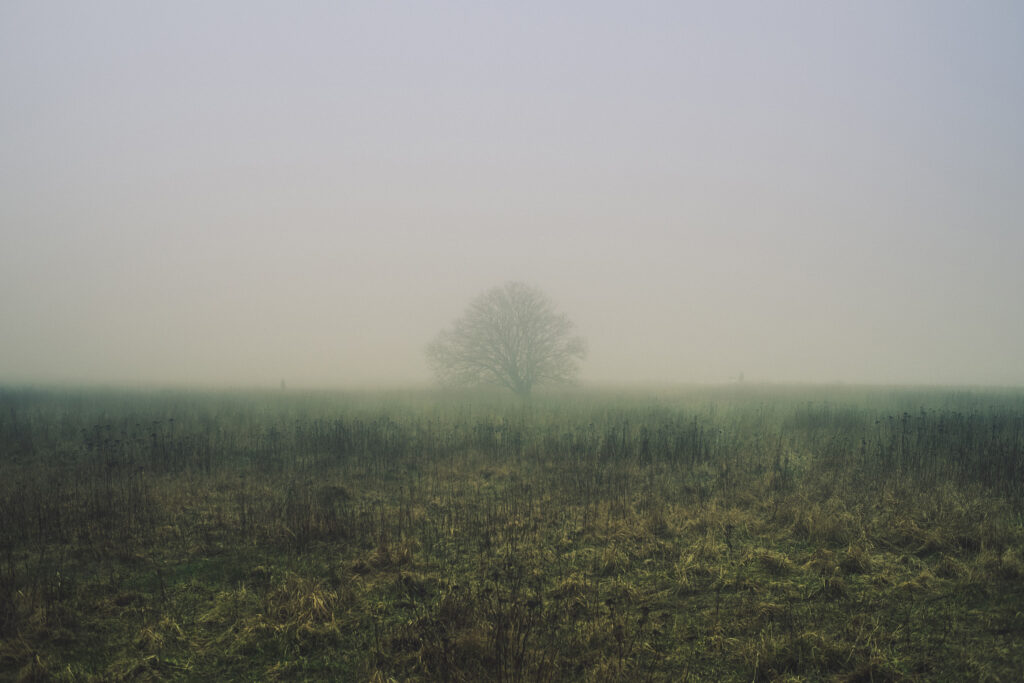
空間は、形として見る前に、詩として感じられている。
Space is sensed as poetry long before it is seen as form.
空間を考えるとき、
私たちは無意識に図面や形を思い浮かべてしまう。
だが、空間は図学より先に、
どこか柔らかい詩として現れてくる。
それは長さでも幅でもなく、
触れないはずのものに触れたときの微細な震えに近い。
When we think of space,
we unconsciously imagine plans or forms.
Yet space arises as something softer,
a quiet poem before any geometry appears.
It is not length or width,
but a tremor felt when touching the untouchable.
この震えを捉える視線こそが、
空間詩という概念の中心にある。
それは、空間に意味を与える手前で
漂う気配そのもの。
This tremor is the heart of spatial poetry.
It is the very presence that drifts
just before space is assigned meaning.
空間は、寸法よりも、そこに沈む密度によって語られる。
Space speaks not through dimension, but through the density that rests within it.
建築を学んだ頃、
空間は形態の積層や構造の調和として理解されていた。
だが時間が経つにつれ、
空間は形体ではなく、
そこに沈む静けさの密度として感じられるようになった。
When I studied architecture,
space was understood as layered form or structural harmony.
But as time passed,
space became less a matter of form
and more the density of quietness resting within it.
例えば庭の端で風がさざめくとき、
その風そのものより、
風が触れた後に残るわずかな揺れが
空間を詩へと変えていく。
For example, when the wind stirs at the edge of a garden,
it is not the wind itself
but the slight movement left behind
that turns space into poetry.
CGやVRで空間を扱うときも同じだ。
ポリゴンでも光でもなく、
そのあいだから浮かび上がる気配が
空間の核心になる。
The same is true when handling space in CG or VR.
It is not polygons or light,
but the presence that emerges between them
that becomes the core of space.
空間詩は、形の外側で生まれ、形の内側で響く。
Spatial poetry is born outside form and resonates within it.
空間詩とは、
空間の内部にある言語ではなく、
空間がまだ言語化される前の
沈黙の層を読み取る行為だ。
その沈黙が濃いほど、
空間は詩として深度を得る。
Spatial poetry is not the language within space
but the reading of the silent layer
before the space becomes language.
The thicker that silence,
the deeper the poetry of the space.
建築の現場でも、
図面には描かれない湿度や光の揺らぎが
空間の質を決定する。
そこには、技術ではなく感受が働いている。
Even in architectural practice,
the humidity and trembling of light that cannot be drawn
determine the quality of a space.
Here sensitivity, not technique, is at work.
光が差し込む角度や、
壁と壁の間に沈む影の粘度。
それらは目に見えないが、
空間詩を構成する最初の音のように作用する。
The angle of light entering a room,
the thickness of shadow that settles between two walls,
though invisible in drawings,
act as the first sounds composing spatial poetry.
空間は、詩になるとき、時間と結び付く。
Space becomes poetry when it binds with time.
空間詩には、必ず時間が介在する。
風が止む前後の一瞬、
人が立ち去った後の余韻、
夕暮れの手前で世界がわずかに沈むとき。
その時間のひずみが、空間に奥行きを与える。
Spatial poetry always involves time.
The moment before the wind ceases,
the afterglow of someone leaving,
the faint settling of the world before dusk.
These distortions of time
give depth to space.
VRで夕景をつくるとき、
光の角度よりも重要なのは、
光が消えかける速度そのものだ。
その速度は、空間に棲む詩のリズムになる。
When creating dusk in VR,
more important than the angle of light
is the very speed at which the light fades.
That speed becomes the rhythm of the poem within the space.
空間詩とは、
形、光、影、時間が重なり、
言葉になる一歩手前でたゆたう
微細な層のことを指している。
Spatial poetry refers to the delicate layer
where form, light, shadow, and time overlap
and drift gently just before becoming language.
空間を詩として読むことは、
世界の深度を読み取ることである。
その深度を捉える目が育つほど、
空間は静かに
もう一つの構成を見せ始める。
To read space as poetry
is to read the depth of the world.
As the eye that perceives this depth develops,
space quietly reveals
another form of composition.